Meme coin trading versus holding which approach fits your risk profile and why
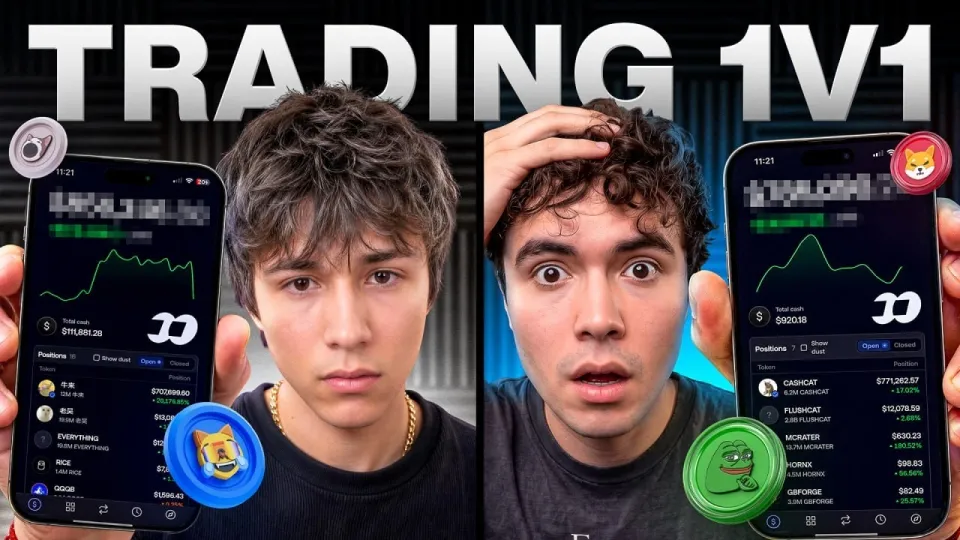
Video: I Challenged A Pro Memecoin Trader (Who Won?)
You can order the same kind of articles for your own video to boost it on YouTube and Google. Just message the Telegram bot @sat_sit_bot. It writes articles around your video, embeds the video and publishes them on popular niche websites (no ads). Your first 50 articles are free.
· based on the channel insentos
Meme coin trading is a short-horizon, high-risk activity where profit comes from timing attention and liquidity rather than from fundamentals, so the right approach is small position sizes, fast execution and a written exit plan before every entry. Anyone treating meme coins as a long-term savings vehicle is mispricing the risk: these tokens can lose most of their value within hours. The insentos challenge video, where the host trades live against a guest described as a pro memecoin trader, is a useful window into how that discipline looks in practice, and the FOMO registration link from the description is where the community side of that workflow starts.
What a meme coin actually is and why it trades differently
A meme coin is a token whose value rests on community, narrative and liquidity, not on revenue or product usage. That single fact explains almost every behaviour you see on-chain: prices move on social attention, holder count changes and the depth of the liquidity pool, and they collapse when the attention or the pool disappears. Unlike a blue-chip asset, there is no earnings floor to anchor a valuation, so the only real risk control is position sizing and speed.
Three mechanics matter most:
- Liquidity depth — a thin pool means your own sell order moves the price against you; check pool size before entering, not after.
- Holder distribution — a token where a handful of wallets control most of the supply can be dumped on you at any moment.
- Contract and launch conditions — mint authority, freeze authority and how the token was launched determine whether the downside is a drawdown or a total loss.
Meme coin trading, as opposed to simply buying and holding a token you like, is the practice of repeatedly taking short exposures to these mechanics and closing them before the crowd does.
How the insentos pro-trader challenge is structured
The insentos video is a live challenge format: the host and a guest trader work through real trades while explaining decisions in real time. The published chaptering splits it into an opening block on trading and giving advice on meme coins, a long trading segment alongside a trader referred to as Grand, and a short outro. That structure is the reason the video works as learning material — the commentary happens while positions are open, not in hindsight.
What the format exposes is the unglamorous part of the job: sizing a trade before knowing whether it works, cutting a loser without negotiating with yourself, and resisting the urge to add to a position that is already going against you. A viewer note in the comments makes the same point from the other side, observing that the guest kept asking about thought process mid-trade so the session stayed educational rather than purely competitive.
Execution stack: Axiom, FOMO and what each is for
The tools named in the video description map onto two different jobs, and mixing them up is a common beginner error. Axiom is the trading terminal: charting, order execution and on-chain data for Solana meme coins in one interface. FOMO covers the community and referral layer — groups, calls and shared research rather than order flow.
A practical setup for someone starting out:
- Use one execution terminal consistently so hotkeys and layout become muscle memory; switching tools mid-trade costs seconds that matter.
- Keep a separate wallet for meme coin activity, funded only with capital you can lose entirely.
- Pre-set slippage and priority fee levels; default settings are frequently the reason a fill is far worse than the chart suggested.
- Log every trade with entry reason, exit reason and result — after fifty trades the pattern in that log is more valuable than any call channel.
Risk rules that separate trading from gambling
Risk management is the only part of meme coin trading that can be taught in advance; everything else is pattern recognition built from repetition. A widely used framework is to risk a fixed small percentage of the trading wallet per position, accept that a meaningful share of entries will fail, and let the winners be large enough to cover the losers.
Concrete rules worth writing down before you open a terminal:
- Cap any single position at a small fraction of the wallet — a total loss on one trade should not change your ability to take the next ten.
- Define the invalidation level at entry: the price or the liquidity condition at which you exit regardless of conviction.
- Scale out on the way up instead of waiting for a single perfect exit; meme coin tops are narrow and fast.
- Stop trading after a defined daily loss; the second half of a bad session is where accounts die.
- Never average down into a token whose narrative has already broken.
One recurring comment under the video points out that sessions like this often end in a loss and that trading from an account with reach is easier than trading anonymously. Both halves are fair: audience attention can move a small-cap token, and a public trader's results are not a neutral sample. Treat any live session as a demonstration of process, not as evidence of expected returns.
Common questions from new meme coin traders
Beginners arrive with the same handful of doubts, and most of them are about expectations rather than tactics. The most frequent is capital: viewers ask for a 50-to-1000 style challenge, which sounds motivating but compresses the risk of ruin into a single unlucky sequence — a 20x target implies a strategy that survives many consecutive losses, and almost no discretionary meme coin approach does.
The second recurring theme is access. Several comments note that everyone advertises communities and groups but joining them is difficult or gated, which is why transparent referral-based entry points such as the FOMO link matter for newcomers trying to see how experienced traders actually talk about positions. The third theme is information density: viewers repeatedly ask for more sessions in this format because watching decisions being made live teaches risk behaviour that a written guide cannot.
The honest answer to all three is the same: watch the process, copy the risk rules, and ignore the profit figures. Someone else's 40-minute session is a sample of one.
Useful links
- FOMO — registration and community access
- Axiom — meme coin trading terminal
- insentos on X
- insentos on Instagram
- insentos on TikTok
Final takeaway
Meme coin trading rewards preparation and punishes improvisation, and the insentos challenge video shows that even an experienced guest spends most of the session managing risk rather than chasing entries. The transferable lessons are unglamorous: size small, define exits before entry, keep a separate wallet, and treat every live session as a process demonstration rather than a performance record. If you want to follow that workflow with community support, start with the FOMO registration link and pair it with a terminal you know well. The insentos channel is the source of the original challenge and a reasonable place to watch how these decisions unfold in real time.
Key takeaways
- Meme coins are high-volatility tokens driven by attention, liquidity and narrative rather than cash flow or earnings.
- The insentos challenge video pits the host against a guest pro trader in a live session using Axiom and FOMO, split into trading/advice, a 37-minute trading block with Grand, and an outro.
- Most meme coin trades are decided in minutes: entry on momentum, exit on liquidity or narrative decay, with strict position sizing.
- Tools named in the video description: axiom.trade for execution and charting, fomo.family for community and referrals.
- Viewer feedback shows the biggest gaps for beginners are strategy transparency, access to communities and unrealistic profit expectations.
Questions & answers
Is meme coin trading profitable for beginners?
For most beginners it is not, at least not consistently. The edge comes from repetition, fast execution and strict sizing, and the learning phase usually costs money. Treat early trades as tuition paid for pattern recognition, not as income.
How much capital do I need to start trading meme coins?
There is no minimum, but the practical requirement is that the entire trading wallet is money you can lose without affecting your life. Small accounts are actually an advantage early on because position sizing discipline is easier to hold when the numbers are small.
What is the difference between Axiom and FOMO in this workflow?
Axiom is the execution terminal used for charting, buying and selling Solana meme coins. FOMO is the community and referral layer used for groups, calls and shared research. One handles order flow, the other handles information.
Why do live trading videos often end in a loss?
Live sessions are a small, unrepresentative sample and the trader is often narrating while managing positions, which adds friction. A loss in one stream says little about a strategy's expectancy; the process shown matters more than the final number.
Source: I Challenged A Pro Memecoin Trader (Who Won?) · Markdown version