flash usdt: a comprehensive guide to the new method on ChainIDE
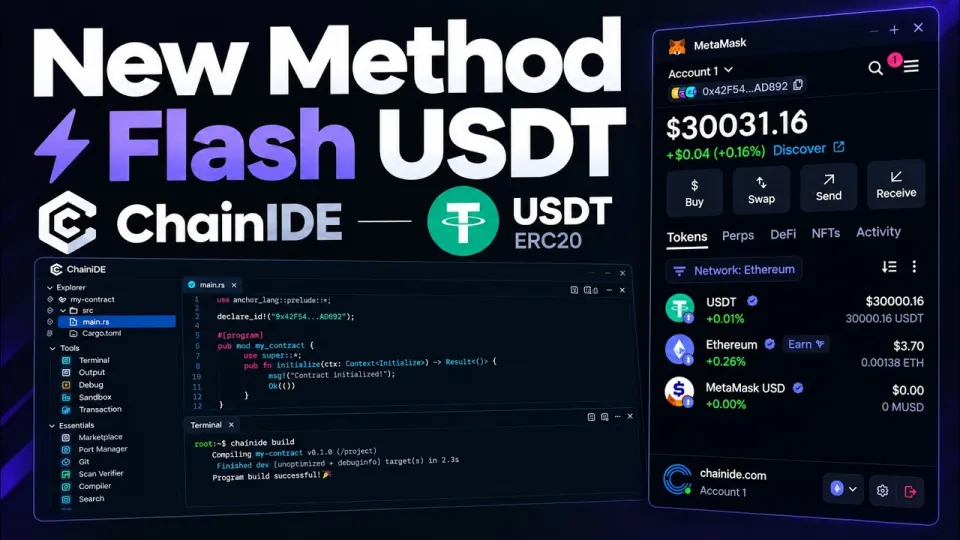
Video: Flash USDT | Found a NEW Method on ChainIDE
· based on the channel Rca FastPrint
Flash USDT is a method involving the creation and interaction with USDT tokens using ChainIDE and MetaMask, focusing on the Ethereum network and ERC20 token standards. This approach emphasizes smart contract development, testing, and wallet integration to simulate or understand token workflows safely. For access to the ChainIDE platform, which enables this process, visit ChainIDE official site.
Understanding Flash USDT and Its Concept
Flash USDT revolves around creating or simulating USDT tokens rapidly using smart contracts within a developer-friendly environment. This method is not about unauthorized token generation but rather educational and developmental testing of ERC20 tokens representing stablecoins like USDT. By leveraging ChainIDE, developers can draft, deploy, and interact with smart contracts that mimic USDT behavior for learning or prototype purposes.
Setting Up ChainIDE for Flash USDT Development
ChainIDE is an online integrated development environment tailored for blockchain developers. To start with Flash USDT, register or access ChainIDE at the provided link and create a new project. The interface supports Solidity coding for ERC20 token contracts, compilation, deployment, and debugging. Important steps include:
- Writing or importing an ERC20 token contract script designed to emulate USDT.
- Compiling the contract with Solidity compiler integrated into ChainIDE.
- Deploying the contract to a testnet or local blockchain environment within ChainIDE.
ERC20 Token Structure in Flash USDT
The ERC20 standard defines the basic functionality of tokens on Ethereum-compatible blockchains. Key parts include:
- `totalSupply`: The total number of tokens.
- `balanceOf`: Returns the token balance of an address.
- `transfer`: Moves tokens from sender to recipient.
- `approve` and `transferFrom`: Allow delegated token transfers.
In the Flash USDT method, the ERC20 token contract replicates USDT's behavior to help users understand token mechanics and wallet interactions without using real funds.
Integrating MetaMask and Ethereum Network Interaction
MetaMask acts as the wallet interface for interacting with deployed contracts. To connect:
- Install MetaMask browser extension.
- Connect MetaMask to the Ethereum test network used by ChainIDE.
- Import the deployed contract address into MetaMask.
- Execute contract functions like transferring tokens or approving allowances.
Users must verify contract addresses and transaction details in MetaMask before signing to avoid risks. The Flash USDT method stresses caution due to the experimental nature of the contracts.
Smart Contract Development Workflow and Testing
Developing Flash USDT tokens involves:
- Writing Solidity code representing the token contract.
- Using ChainIDE's tools to compile and deploy on a testnet.
- Testing contract functions via the ChainIDE interface and MetaMask wallet.
- Verifying the contract source code and behavior to ensure reliability.
Common mistakes include deploying on the wrong network, interacting with unverified contracts, or sending real funds. Thorough testing in a controlled environment is crucial.
Useful Links
- ChainIDE platform: https://chainide.com/
- Flash USDT creation script and documentation: https://sites.google.com/view/defiflashusdt
Итог
The Flash USDT method presented by the Rca FastPrint channel offers a detailed educational approach to creating and interacting with USDT-like ERC20 tokens using ChainIDE and MetaMask. It provides developers and enthusiasts with practical insights into smart contract workflows, token standards, and wallet integration on the Ethereum network. Always use the official ChainIDE platform for secure and efficient development.
Explore this method responsibly to deepen your understanding of DeFi token mechanics and smart contract deployment.
Key takeaways
- Flash USDT utilizes ChainIDE and MetaMask for token creation and testing
- ERC20 token structure is key to understanding Flash USDT setup
- ChainIDE offers an integrated development environment for smart contracts
- Interaction with Ethereum network requires wallet verification and caution
- The method is educational and requires careful contract review before use
Questions & answers
What is Flash USDT and how does it work?
Flash USDT is an educational method for simulating the creation and interaction with USDT-like ERC20 tokens using ChainIDE and MetaMask. It involves deploying smart contracts on test networks to understand token mechanics without using real funds.
What role does ChainIDE play in Flash USDT?
ChainIDE is an online development environment used to write, compile, deploy, and test smart contracts. It facilitates the complete workflow of creating Flash USDT tokens and interacting with them in a controlled environment.
How does MetaMask integrate with the Flash USDT method?
MetaMask serves as the wallet interface for interacting with deployed smart contracts. It connects to the Ethereum network, allowing users to execute token transfers, approvals, and other contract functions securely while verifying transactions before signing.
Is it safe to use Flash USDT with real assets?
Flash USDT is intended for educational and testing purposes only. Users should never send real funds to unknown contracts or unverified addresses. Always review contract source code, network, and transaction details carefully before any interaction to avoid loss of assets.
Source: Flash USDT | Found a NEW Method on ChainIDE · Markdown version